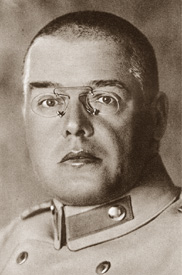
| |
|
| 28.03.1887 |
Offizier-Aspirant |
| 28.03.1887 |
4.
Thüringisches Infanterie-Regiment Nr. 72 - Torgau |
| 01.10.1887 |
Königlich Preußische
Kriegsschule - Neisse
(Student at KP Military Academy) |
| 13.12.1887 |
Portepée-Fähnrich |
|
05.07.1888 |
4.
Thüringisches Infanterie-Regiment Nr. 72 - Torgau
(return from KP Military Academy) |
| 19.09.1888 |
Sekonde-Lieutenant |
| 18.04.1893 |
8. Ostpreußisches
Infanterie-Regiment Nr. 45 - Lyck
(Bn Adjutant) |
| 12.09.1895 |
Premier-Lieutenant |
| 01.10.1895 |
Preußische Kriegsakademie
- Berlin
(Student at Royal Prussian War College) |
|
22.03.1897 |
Königlich Preußische Kaiser
Wilhelm-Erinnerungs-Medaille (Zentenarmedaille) |
|
27.07.1898 |
8. Ostpreußisches
Infanterie-Regiment Nr. 45 - Lyck
(return from War College) |
| 01.10.1898 |
Großer Generalstab - Berlin (detached
to Prussian Great General Staff) |
|
01.01.1899 |
Premier-Lieutenant
= Oberleutnant |
| 23.03.1901 |
Hauptmann |
| 23.03.1901 |
Generalstab der Armee - Berlin (assigned
to General Staff of the Army, aggregiert) |
| 01.04.1901 |
V. Armee-Korps - Posen (detailed
to Stülpnagel's General Staff) |
|
19.09.1901 |
I. Armee-Korps - Königsberg i. Pr. (detailed
to Frh v.d. Goltz's General Staff) |
|
00.00.1901 |
Königlich Preußischer Kronen-Orden - 4.
Klasse |
|
08.10.1902 |
Orden der Königlich Italienischen Krone -
Offizierkreuz |
| 17.02.1903 |
Füsilier-Regiment
,,Graf
Roon” (1.
Ostpreußisches) Nr. 33 - Gumbinnen (Coy
Cdr) |
| 11.02.1904 |
Generalstab der Armee - Berlin (assigned
to General Staff of the Army, aggregiert) |
| 23.02.1904 |
Kaiserlich 1. Japanische Armee -
Mandschurei (Observer with 1.
Japanese Army in Manchuria during
Russo-Japanese War) |
| 02.10.1905 |
Großer Generalstab - Berlin (return
from Japan to Prussian Great General Staff) |
|
27.02.1906 |
Königlich Preußisches Erinnerungszeichen
zur Silbernen Hochzeit 1906 |
|
03.03.1906 |
Königlich Preußischer Roter Adler-Orden -
4. Klasse mit Schwertern |
| 27.01.1907 |
1. Infanterie-Division -
Königsberg i. Pr. (detailed as Gronau's
First General Staff Officer, Ia) |
| 11.09.1907 |
Major |
| 01.10.1909 |
Großer Generalstab - Berlin (detailed
to Great General Staff) |
|
22.01.1911 |
Königlich Preußischer Kronen-Orden - 3.
Klasse |
| 01.10.1911 |
Preußische Kriegsakademie
- Berlin (Instructor at Royal
Prussian War College) |
| 01.08.1912 |
Infanterie-Regiment „Graf
Tauentzien von Wittenberg“ (3. Brandenburgisches) Nr. 20 - Wittenberg
(detached for duty) |
| 01.10.1912 |
Preußische Kriegsakademie
- Berlin (Instructor, return from
Fall Exercise with 3IR-20) |
|
13.12.1912 |
Königlich Preußischer
Dienstauszeichnungskreuz für Offiziere - 25-jähriger |
|
15.06.1913 |
25-jährigen Regierungs-Jubiläum Wilhelm
II. |
| 01.10.1913 |
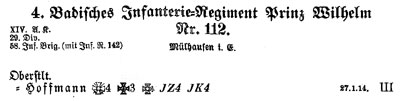
4. Badisches Infanterie-Regiment ,,Prinz
Wilhelm”
Nr. 112 - Mülhausen i. E. (Bn Cdr) |
| 27.01.1914 |
Oberstleutnant |
| |
|
| Great
War |
| |
|
| 02.08.1914 |
8. Armee-Oberkommando (Prittwitz's
First General Staff Officer, Ia) |
|
22.08.1914 |
8. Armee-Oberkommando (Hindenburg's
First General Staff Officer, Ia) |
|
18.09.1914 |
9. Armee-Oberkommando (Hindenburg's
First General Staff Officer, Ia) |
|
01.11.1914 |
Oberbefehlshaber Ost
(Hindenburg's
First General Staff Officer, Ia) |
|
00.00.1914 |
das Königlich Preußische Eiserne Kreuz
1914 - 2. Klasse |
| 18.08.1916 |
Oberst |
| 29.08.1916 |
Oberbefehlshaber Ost
(Prinz Leopold von Bayern's Chief of Staff) |
|
07.10.1916 |
Orden Pour le Mérite |
|
23.10.1916 |
Königlich Sächsischer Militär-St.
Heinrichs-Orden - Ritterkreuz |
|
25.07.1917 |
das Eichenlaub zum Orden Pour le Mérite |
|
03.08.1917 |
Königlich Bayerischer
Militär-Max-Joseph-Orden - Ritterkreuz |
|
03.09.1917 |
Königlich Sächsischer Militär-St.
Heinrichs-Orden - Kommandeur 2. Klasse |
| 29.10.1917 |
Generalmajor |
|
11.11.1918 |
Waffenstillstand von Compiègne (Armistice) |
| |
|
| |
|
| |
|
06.05.1914
|
| |
|
|
| |
|
*
* *
|
| |